








USCAP Diagnostic Pathology Update 2026
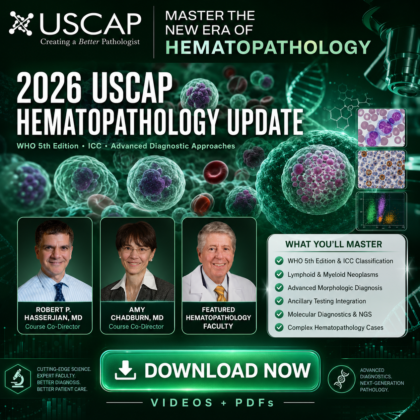
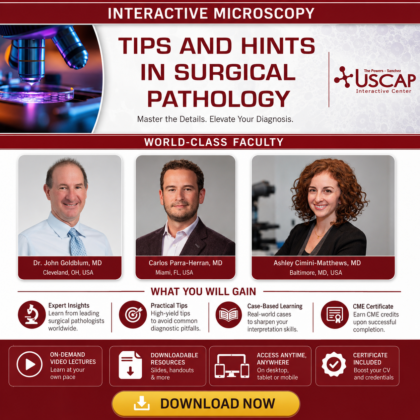
USCAP Diagnostic Pathology Update 2026 is a comprehensive pathology education program featuring current diagnostic updates, challenging cases, evolving classifications, molecular and genomic advances, and practical approaches across major pathology subspecialties.
Designed for practicing academic and community pathologists as well as pathologists-in-training, the program brings together distinguished USCAP faculty to discuss important developments that can influence everyday diagnostic practice.
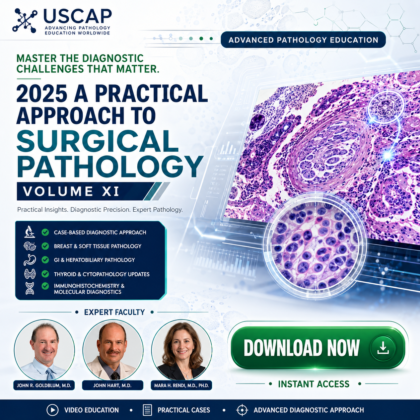
The course covers breast, genitourinary, gynecologic, thoracic, gastrointestinal, hepatobiliary, bone, soft tissue, dermatopathology, thyroid, salivary gland and head & neck pathology.
Demo :
USCAP Diagnostic Pathology Update 2026 – Course Overview
The USCAP Diagnostic Pathology Update focuses on practical diagnostic challenges encountered across multiple organ systems.
The program examines updated diagnostic criteria, tumor classification, morphology, immunohistochemistry, biomarkers, molecular pathology and genomic developments.
Learners will explore both common and uncommon diagnostic problems through faculty presentations and interactive case-based sessions.
Included Course Materials
The course includes:
- Video Lectures
- PDF Slides and Course Materials
- Subtitle Files
- Presentation Materials
These materials allow learners to watch the presentations while using the accompanying slides and subtitles for additional review.
USCAP Diagnostic Pathology Update Learning Objectives
The program is designed to help learners:
- Update diagnostic criteria for lesions occurring at different body sites
- Understand important changes in contemporary tumor classification
- Review new information from molecular and genomic pathology
- Recognize challenging diagnostic patterns and potential pitfalls
- Incorporate updated diagnostic information into pathology practice
- Apply new knowledge to help optimize patient care and outcomes
Breast Pathology Updates
Breast pathology sessions include:
Biomarker Driven Breast Cancer Decisions: What a Pathologist Needs to Know
Kimberly Allison, MD
Explore the growing importance of biomarkers in breast cancer diagnosis and clinical decision-making.
WHO Wants to Know the Latest? Tumours of the Breast 6th Edition Updates
Kimberly Allison, MD
Review important updates related to the evolving WHO classification of breast tumors.
Papillary Proliferations and Pitfalls: Test Yourself! (ARS)
Kimberly Allison, MD
Review challenging papillary breast lesions and important diagnostic pitfalls.
Intraductal Proliferations of the Breast: How’s Your Diagnostic Agreement? (ARS)
Kimberly Allison, MD
Explore diagnostic challenges associated with intraductal proliferative breast lesions.
Breast Cancer Risk Lesions and Precursors: Current Concepts and Conundrums
Kimberly Allison, MD
Review current concepts surrounding breast cancer precursor and risk lesions.
Genitourinary Pathology Updates
The USCAP Diagnostic Pathology Update 2026 includes extensive coverage of prostate, renal, urothelial and testicular pathology.
Prostatic Adenocarcinoma Grading: 2026 Update
Jesse McKenney, MD
Review contemporary developments in prostatic adenocarcinoma grading.
Low-Risk Oncocytic Renal Neoplasia (ARS)
Jesse McKenney, MD
Explore current diagnostic concepts involving low-risk oncocytic renal tumors.
Flat Urothelial Lesions with Atypia: Difficult for Everyone!
Jesse McKenney, MD
Review challenging flat urothelial lesions and diagnostic problems involving atypia.
Germ Cell Tumors of the Testis: Classification with Emphasis on Morphology
Jesse McKenney, MD
Review testicular germ cell tumor classification with emphasis on morphology.
Renal Neoplasms with Papillary Architecture (ARS)
Jesse McKenney, MD
Develop a practical approach to renal neoplasms displaying papillary architecture.
Gynecologic Pathology Updates
A Practical Approach to Uterine Smooth Muscle Tumors
Marisa Nucci, MD
Review diagnostic approaches for differentiating uterine smooth muscle tumors.
Histotyping of Endometrial Carcinoma
Marisa Nucci, MD
Examine contemporary endometrial carcinoma classification and the roles of morphology and immunohistochemistry.
What’s New in the Upcoming 6th Edition WHO Classification of Female Genital Tract Tumours
Marisa Nucci, MD
Review emerging updates involving the WHO classification of female genital tract tumors.
Thoracic and Pulmonary Pathology
Pleural Mesothelioma – Is It Always Straightforward?
Cesar Moran, MD
Review challenging aspects of pleural mesothelioma diagnosis.
Mediastinal Mass – The Challenges in Interpretation (ARS)
Cesar Moran, MD
Explore practical diagnostic approaches to mediastinal lesions.
Thymoma – The Yesterday of Today
Cesar Moran, MD
Review contemporary diagnostic concepts in thymic pathology.
From Biopsy to Resection: The Surprises (ARS)
Cesar Moran, MD
Examine unexpected findings that can occur between biopsy and resection specimens.
Challenging Uncommon Primary Tumors of the Lung
Cesar Moran, MD
Explore uncommon primary pulmonary neoplasms and their differential diagnosis.
Bone and Soft Tissue Pathology
The USCAP Diagnostic Pathology Update also provides focused education in bone and soft tissue pathology.
Sessions include:
- Skeleton Key: Introduction to Bone Tumors
- Old Bones, New Tricks: Bone Tumor Pathology in Molecular Era
- Giant Cell Rich Lesions of Bone and Soft Tissue
- Soft Tissue Tumors as Primaries in Bone: Pearls and Pitfalls
- Epithelioid Soft Tissue Tumors: Diagnostic Challenges
These presentations explore morphology, differential diagnosis, molecular developments and challenging diagnostic scenarios.
Gastrointestinal, Liver and Hepatobiliary Pathology
GI and hepatobiliary pathology topics include:
- Updates in GI Tract Drug Injury and Infectious Diseases
- Systemic Disease Cases Involving the Tubular GI Tract
- A Pragmatic Approach to Diagnosing Medical Liver Biopsies
- Distinguishing HCC From Other Tumors
- Select Biliary and Gallbladder Neoplastic Cases
These sessions emphasize practical diagnostic strategies and challenging differential diagnoses.
Head and Neck Pathology
The USCAP Diagnostic Pathology Update 2026 also provides important updates across head and neck pathology.
Topics include:
- Challenges in Head and Neck Squamous Lesions
- Updates in Salivary Gland Pathology
- Critical Issues in Thyroid Pathology
- Sinonasal Pathology
- Head and Neck Neuroendocrine Neoplasms
Dermatopathology
Selected dermatopathology and related sessions include:
- Melanocytomas, Spitz Tumors and More
- Diagnostically Challenging Adnexal Tumors
- Vexing Vascular Tumors
These sessions address challenging entities and important diagnostic considerations.
Major Pathology Topics Covered
The program covers:
- Diagnostic Pathology
- Surgical Pathology
- Breast Pathology
- Genitourinary Pathology
- Gynecologic Pathology
- Thoracic Pathology
- Pulmonary Pathology
- Gastrointestinal Pathology
- Liver Pathology
- Hepatobiliary Pathology
- Bone Pathology
- Soft Tissue Pathology
- Dermatopathology
- Head and Neck Pathology
- Thyroid Pathology
- Salivary Gland Pathology
- Molecular Pathology
- Genomic Pathology
- Tumor Classification
- WHO Classification Updates
- Biomarkers
- Immunohistochemistry
- Diagnostic Pitfalls
- Challenging Pathology Cases
Who Should Take the USCAP Diagnostic Pathology Update?
The USCAP Diagnostic Pathology Update is designed primarily for:
- Practicing Academic Pathologists
- Community Pathologists
- Pathologists-in-Training
- Pathology Residents and Fellows seeking advanced diagnostic updates
It is particularly relevant for pathology professionals who want to review contemporary diagnostic criteria, classification changes, molecular developments and challenging cases across multiple pathology subspecialties.
Why Study the USCAP Diagnostic Pathology Update 2026?
Modern diagnostic pathology continues to evolve as molecular and genomic findings become increasingly integrated with traditional morphology, immunohistochemistry and classification systems.
The USCAP Diagnostic Pathology Update 2026 provides a broad review of these developments while emphasizing practical diagnostic problems encountered in everyday pathology.
By combining multiple subspecialties within one comprehensive program, learners can review current concepts in tumor classification, difficult differential diagnoses, biomarkers, molecular pathology and important diagnostic pitfalls.
Original Release Date: August 20, 2026


Reviews
There are no reviews yet.