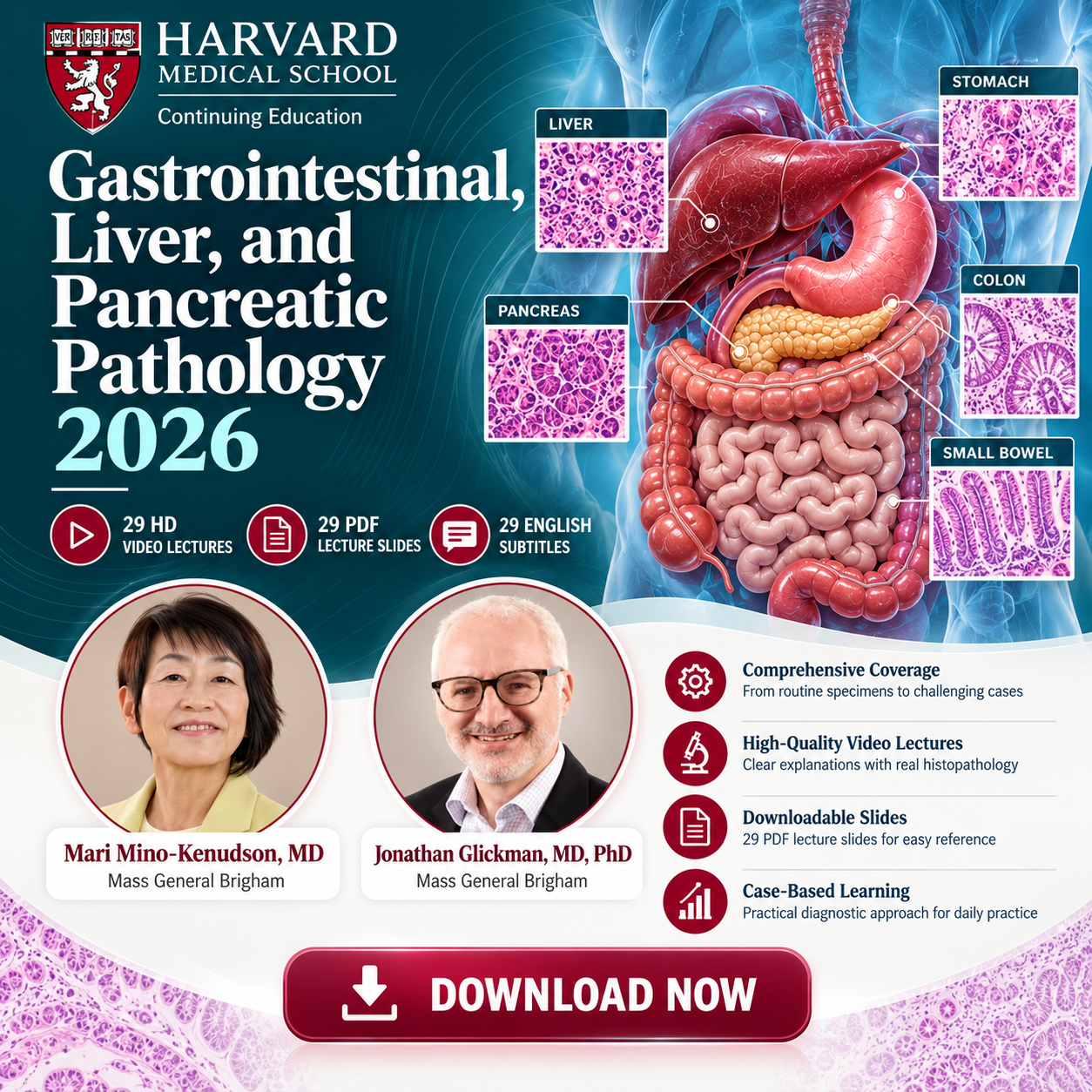







Gastrointestinal, Liver
& Pancreatic Pathology
A comprehensive update in gastrointestinal, hepatic and pancreaticobiliary
pathology integrating morphology, biopsy interpretation, cytology,
immunohistochemistry and molecular diagnostics.
29 VIDEOS
29 VTT SUBTITLES
29 PDFs
6.48 GB
COMPLETE DIGITAL COURSE
• HD Video Lectures
• English VTT Subtitles
• PDF Lecture Materials
Read the Pattern.
Build the Differential.
Reach the Diagnosis.
The Gastrointestinal, Liver and Pancreatic
Pathology 2026 course provides an extensive update on diagnostic
surgical pathology, cytology and molecular testing across diseases of the
gastrointestinal tract, liver, gallbladder and pancreas.
The curriculum includes both neoplastic and non-neoplastic disease,
with particular attention to inflammatory disorders, precursor lesions,
tumor classification, biopsy interpretation, staging, biomarkers and
challenging differential diagnoses.
A systematic approach to biopsy and resection specimens is emphasized,
combining standard gross and microscopic evaluation with the judicious use
of immunohistochemistry and molecular pathology.
A Systematic Approach to the Specimen
Identify the Organ & Clinical Context
Upper GI, colon, pancreas, biliary tract or liver — interpreted within
the appropriate clinical setting.
Read the Morphologic Pattern
Evaluate inflammatory, dysplastic, neoplastic and other characteristic
histologic patterns.
Build the Differential Diagnosis
Separate entities with overlapping morphologic and clinical presentations.
Use Ancillary Testing Judiciously
Integrate immunohistochemistry, molecular testing and clinically relevant biomarkers.
Render the Final Diagnosis
Combine morphology, ancillary studies and clinical findings into an accurate,
clinically useful interpretation.
A Comprehensive Update in Digestive System Pathology
This program provides a broad review of
gastrointestinal, pancreaticobiliary and liver pathology,
with emphasis on newly recognized entities and recent advances relevant
to contemporary diagnostic practice.
Participants review systematic approaches to biopsy and resection specimens
using standard gross and microscopic techniques, supported where appropriate
by immunohistochemistry and molecular pathology.
The goal is to improve recognition of important diagnostic patterns,
understand clinically significant biomarkers and apply practical
diagnostic strategies to daily pathology practice and patient management.
One Course Across the Digestive System
Esophagus & Stomach
Barrett’s esophagus, inflammatory conditions, gastric polyps,
precursor lesions and upper GI diagnostic cases.
Small Bowel & Colon
Celiac disease, colitis, IBD, polyps, polyposis, colon cancer,
infectious disorders and staging challenges.
Mesenchymal, Lymphoid & Neuroendocrine
GIST, mesenchymal tumors, GI lymphomas, endocrine tumors
and molecular diagnostics in gastrointestinal malignancy.
Pancreas, Gallbladder & Biliary Tract
Small biopsy and cytology diagnosis, pancreatic tumors,
instructive pancreatic cases and biliary tract pathology.
Liver
Acute hepatitis, vascular disease, autoimmune hepatitis,
cholestatic disorders, hepatocellular carcinoma and mimickers.
What You’ll Learn to Evaluate
Review important updates in classification of digestive system tumors.
Recognize newly described entities and refine differential diagnosis.
Evaluate morphology and appropriate ancillary techniques.
Review screening approaches and biomarkers used for targeted therapy.
Integrate morphologic patterns with clinical information to reach a final diagnosis.
Understand appropriate application and limitations of staging and grading systems.
Recognize common and uncommon hepatic neoplasms and important mimickers.
Interpret pancreatic morphologic patterns within the appropriate clinical context.
Complete Program
Organized by diagnostic region and disease family for easier review.
Upper Gastrointestinal Tract
Colon, IBD & Lower GI
GI Tumors & Molecular Diagnostics
Pancreaticobiliary Pathology
Liver Pathology
A Practical Diagnostic Framework
Stay current with changes affecting digestive system pathology.
Apply systematic approaches to challenging biopsy and resection specimens.
Use immunohistochemistry and molecular pathology where they add diagnostic value.
Connect pathology findings with contemporary therapeutic and management considerations.
Integrate morphology, clinical context and ancillary findings into a clear diagnostic conclusion.
Who Should Study This Course?
Designed for clinicians and laboratory professionals involved in the diagnosis
and management of gastrointestinal, hepatic and pancreaticobiliary disease.
Academic and community pathologists seeking current diagnostic updates.
Clinicians seeking deeper understanding of digestive system pathology and biopsy interpretation.
What’s Included?
HD Video Lectures
Complete educational video program covering all 29 curriculum topics.
English VTT Subtitle Files
Subtitle files accompanying the video lectures.
PDF Lecture Materials
Supporting PDF educational materials for the course.
Total Course Size
GI Pathology in One Program
Recognize the Pattern.
Refine the Differential.
Strengthen the Diagnosis.
A comprehensive diagnostic pathology program spanning gastrointestinal,
pancreaticobiliary and liver disease with practical approaches to morphology,
ancillary testing, molecular diagnostics and clinically relevant biomarkers.



Reviews
There are no reviews yet.