
 Instant Access After Purchase





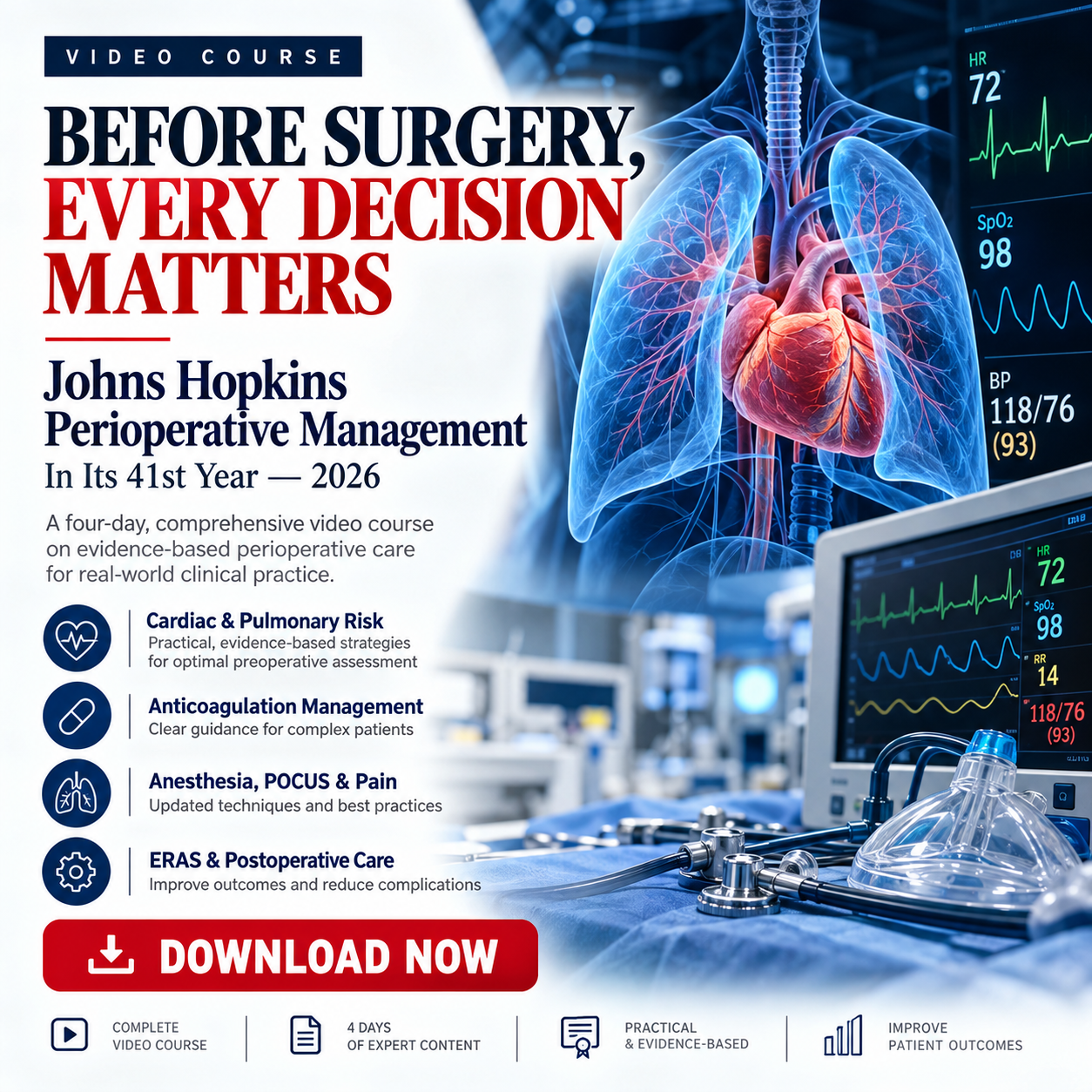
Perioperative Management in Its 41st Year 2026
Comprehensive Perioperative Medicine Update | Preoperative Assessment • Anesthesia • Cardiovascular Risk • Postoperative Care • Patient Safety
Advance your expertise in perioperative medicine with Perioperative Management in Its 41st Year 2026, a comprehensive four-day educational program covering the latest evidence-based approaches to surgical patient evaluation, optimization, and management.
Featuring expert-led lectures, multidisciplinary discussions, and clinically relevant case presentations, this course explores modern strategies for managing patients before, during, and after surgery.
From cardiovascular risk assessment and anticoagulation to pulmonary optimization, pain management, point-of-care ultrasound (POCUS), enhanced recovery protocols, and artificial intelligence, the program provides practical insights for healthcare professionals involved in perioperative care.
COMPLETE DIGITAL COURSE BUNDLE
- 🎥 HD Video Lectures
- 📝 English Subtitles (VTT Files) — if included in the supplied package
- 📄 PDF Educational Materials — if included in the supplied package
- 💾 Total Course Size: ___ GB
- ⚡ Digital Access for Self-Paced Learning
Course Overview
Master Evidence-Based Perioperative Care and Surgical Patient Optimization
Modern perioperative medicine requires a multidisciplinary approach to managing increasingly complex surgical patients. Advances in cardiovascular assessment, anesthesia, anticoagulation, metabolic optimization, pain control, and postoperative monitoring continue to reshape clinical practice.
Perioperative Management in Its 41st Year 2026 offers an extensive educational review of contemporary perioperative medicine, emphasizing practical decision-making, updated clinical recommendations, and strategies to improve patient safety and surgical outcomes.
The four-day program addresses critical challenges across preoperative, intraoperative, and postoperative care, including cardiac and pulmonary risk assessment, heart failure, diabetes, renal dysfunction, anemia, thromboembolic disease, infections, frailty, and postoperative complications.
Additional sessions explore emerging technologies such as point-of-care ultrasound and artificial intelligence, alongside enhanced recovery pathways, quality improvement initiatives, and clinician wellbeing.
Through expert presentations and case-based discussions, participants can strengthen their clinical knowledge and apply evidence-informed approaches to everyday perioperative practice.
Key Course Highlights
Cardiovascular Risk Assessment & Optimization
Review preoperative cardiac evaluation, myocardial injury, heart failure, cardiomyopathy, arrhythmias, and cardiovascular medication management.
Anticoagulation & Blood Management
Explore perioperative antiplatelet therapy, warfarin, direct oral anticoagulants, anemia management, and transfusion strategies.
Pulmonary & Airway Management
Strengthen knowledge of pulmonary risk assessment, respiratory failure, pulmonary hypertension, difficult airway management, and sedation safety.
Advanced Perioperative Monitoring
Understand the clinical applications of POCUS, echocardiography, hemodynamic monitoring, and continuous physiologic assessment.
Metabolic, Renal & Infectious Complications
Review perioperative diabetes management, electrolyte abnormalities, acute kidney injury, fluid therapy, and infection prevention.
Pain Management & Enhanced Recovery
Explore multimodal analgesia, chronic opioid therapy, modern pain management approaches, and Enhanced Recovery After Surgery (ERAS).
Frailty, Patient Safety & Emerging Technologies
Examine frailty assessment, prehabilitation, postoperative delirium, quality improvement, and AI applications in perioperative medicine.
Learning Objectives
Upon completing this educational program, participants should be better prepared to:
- Evaluate Preoperative Risk: Apply evidence-based approaches to cardiovascular and pulmonary risk assessment before surgery.
- Optimize Complex Medical Conditions: Review perioperative management strategies for heart failure, cardiomyopathy, diabetes, renal dysfunction, liver disease, pulmonary hypertension, and frailty.
- Manage Anticoagulation and Blood Disorders: Understand contemporary approaches to antiplatelet therapy, anticoagulants, anemia, and transfusion.
- Recognize and Address Postoperative Complications: Review the prevention, detection, and management of myocardial injury, atrial fibrillation, respiratory failure, delirium, infections, and acute kidney injury.
- Improve Pain Management: Explore multimodal analgesia and perioperative considerations for patients receiving chronic opioid therapy.
- Integrate Advanced Monitoring: Understand the role of point-of-care ultrasound, echocardiography, and goal-directed hemodynamic therapy.
- Apply Enhanced Recovery Principles: Review ERAS pathways, prehabilitation, and multidisciplinary patient optimization strategies.
- Explore AI and Quality Improvement: Understand emerging applications of artificial intelligence and evidence-based approaches to patient safety.
Comprehensive Course Curriculum
Day 1 — Cardiovascular Risk Assessment & Preoperative Optimization
The first day focuses on identifying cardiovascular risks, optimizing patients before surgery, and managing medications and cardiac conditions.
Topics include:
- Introduction and Conference Goals
- Preoperative Cardiac Risk Assessment and Testing
- Prevention and Treatment of Perioperative Myocardial Injury
- Perioperative Management of Cardiomyopathy
- Optimized Preoperative Evaluation
- Antiplatelet Therapy Before Surgery
- Management of Warfarin and Direct Oral Anticoagulants (DOACs)
- Heart Failure Optimization
- New ECG Abnormalities Before Surgery
- Interpretation of Echocardiography Reports
- Perioperative Medication Management
- Point-of-Care Ultrasound (POCUS) in Perioperative Medicine
Day 2 — Pulmonary Medicine, Hemodynamics & Airway Management
Explore pulmonary risk assessment, respiratory complications, cardiac devices, hemodynamic management, and airway safety.
Topics include:
- Preoperative Pulmonary Risk Assessment
- Pulmonary Hypertension
- Perioperative Anemia and Transfusion
- Burnout and Emotional Exhaustion
- Physician Wellbeing
- Respiratory Failure
- Pacemakers and Implantable Cardioverter Defibrillators
- Postoperative Troponin Management
- Goal-Directed Hemodynamic Therapy
- Postoperative Atrial Fibrillation
- Difficult Airway Management
- Sedation Safety
- Acute Hypoxia
- Optional Point-of-Care Ultrasound Workshop
Day 3 — Metabolic Medicine, Pain Management & Infection Prevention
This section addresses metabolic optimization, renal complications, infection prevention, fluid therapy, and complex pain management.
Topics include:
- Diabetes Management
- Hyperglycemia
- Renal Dysfunction
- Multimodal Pain Management
- Surgical Site Infection Prevention
- Healthcare-Associated Infections
- Obstetric and Non-Obstetric Surgery
- Diabetes Case Discussions
- Hyponatremia
- Electrolyte Disorders
- Chronic Opioid Therapy
- Buprenorphine
- Methadone
- Cannabis and Modern Pain Therapies
- Acute Kidney Injury Prevention
- Perioperative Fluid Therapy
- Obstructive Sleep Apnea
- Optional Wellness Workshop
Day 4 — Frailty, Quality Improvement & the Future of Perioperative Medicine
The final day examines postoperative complications, patient-centered care, enhanced recovery, and emerging clinical technologies.
Topics include:
- Deep Vein Thrombosis
- Pulmonary Embolism
- Postoperative Delirium
- Ambulatory Surgery
- Hepatic Dysfunction
- Perioperative Quality Improvement
- Patient Safety
- Frailty Assessment
- Prehabilitation
- End-of-Life Care
- Enhanced Recovery After Surgery (ERAS)
- Postoperative Mental Status Changes
- Sepsis Management
- Continuous Physiologic Monitoring
- Artificial Intelligence in Perioperative Medicine
Optional workshops are part of the conference schedule; their inclusion in the digital package should be verified separately.
Who Should Take This Course?
This comprehensive program is designed for physicians and healthcare professionals involved in surgical patient evaluation, anesthesia, perioperative management, and postoperative care.
Target Audience:
- Anesthesiologists
- Cardiologists
- Pulmonologists
- General Surgeons
- Hospitalists
- Intensivists
- Critical Care Physicians
- Nephrologists
- Endocrinologists
- Infectious Disease Specialists
- Geriatricians
- Internal Medicine Physicians
- Nurse Practitioners
- Physician Assistants
- Medical Residents and Fellows
What’s Included in the Digital Course?
HD Video Lectures
Educational video presentations covering the four-day perioperative medicine curriculum, including clinical guidelines, practical management strategies, and case-based discussions.
English Subtitles (VTT)
Where supplied, English subtitle files support flexible learning and convenient lecture review.
PDF Educational Materials
Where supplied, presentation slides and supplementary educational documents provide useful reference materials for continued study.
Digital Course Details
- Course: Perioperative Management in Its 41st Year 2026
- Educational Format: Four-Day Conference
- Video Format: Digital Video Lectures
- Subtitle Format: VTT (subject to package availability)
- Supporting Documents: PDF (subject to package availability)
- Total Download Size: ___ GB
- Delivery: Digital Access
- Learning Style: Self-Paced Review
Why Choose Perioperative Management in Its 41st Year 2026?
Comprehensive Multidisciplinary Education
Explore perioperative care across cardiology, anesthesiology, pulmonary medicine, internal medicine, surgery, and critical care.
Evidence-Based Clinical Updates
Review current recommendations and practical strategies for managing complex surgical patients.
Practical Case-Based Learning
Connect clinical concepts with real-world scenarios and multidisciplinary management discussions.
Advanced Patient Optimization
Strengthen your understanding of preoperative assessment, intraoperative considerations, and postoperative complication prevention.
Emerging Technologies and Modern Practice
Explore the growing roles of POCUS, artificial intelligence, continuous monitoring, and enhanced recovery pathways.
Flexible Professional Learning
Review available digital educational materials at your own pace and revisit clinically relevant sessions as needed.
Advance Your Perioperative Medicine Expertise in 2026
Better Preoperative Assessment. Smarter Perioperative Decisions. Safer Surgical Care.
Stay informed about the clinical evidence, emerging technologies, and multidisciplinary strategies shaping modern perioperative medicine.
From cardiovascular optimization and anticoagulation management to advanced monitoring, pain control, frailty assessment, and postoperative recovery, this comprehensive program offers valuable educational insights for healthcare professionals caring for surgical patients.
GET INSTANT ACCESS — EXPLORE THE COMPLETE DIGITAL COURSE
Digital educational content only. No physical product is shipped. Exact file contents and availability should be confirmed before purchase.

Reviews
There are no reviews yet.